
From late-season snow to sudden temperature swings and lingering moisture, spring’s constantly changing weather patterns make it one of the most difficult seasons to forecast.
If you’ve been in the snow and ice business long enough, you’ve seen it.
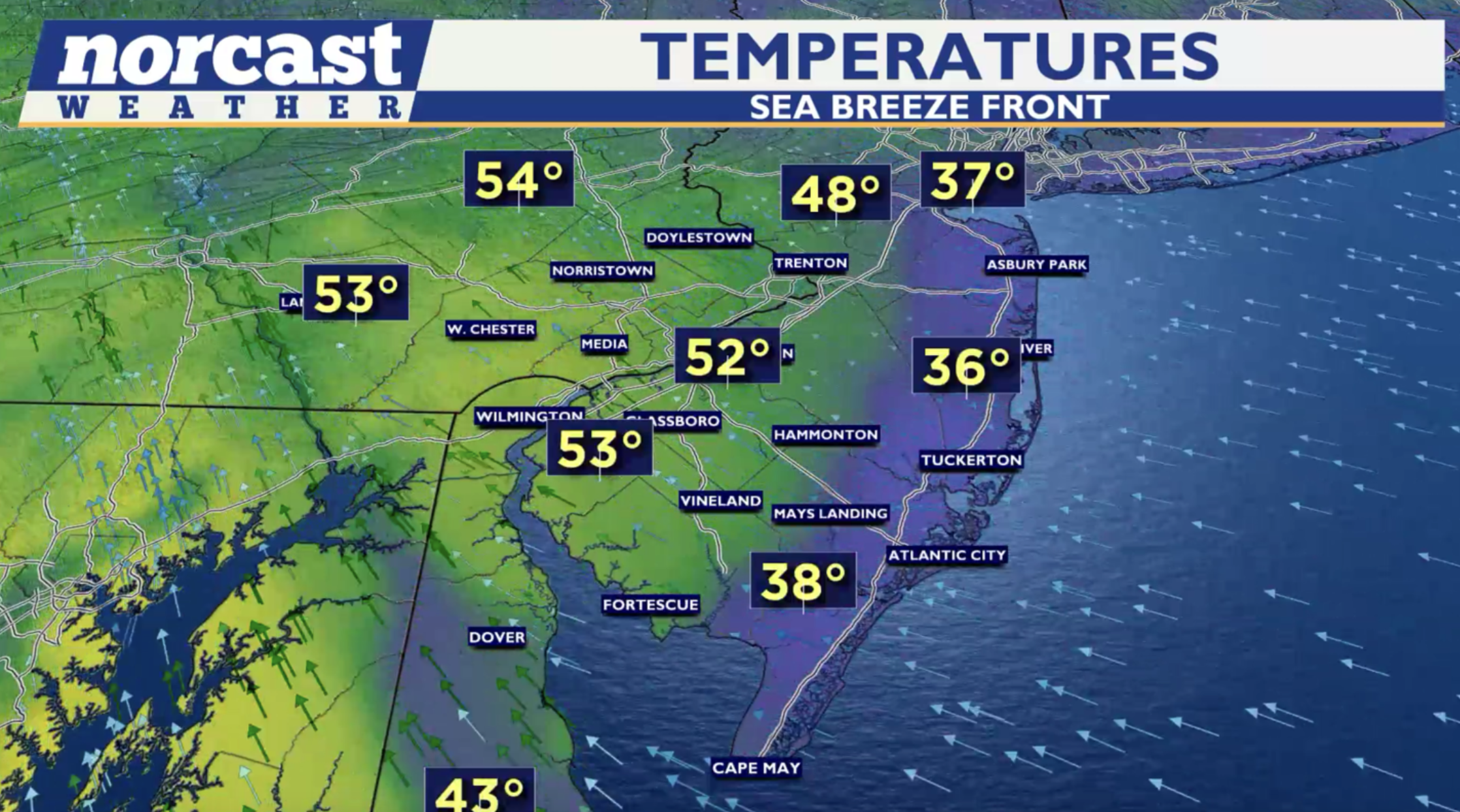
It’s 65 degrees inland, but 48 near the coast. A jobsite is dry 10 miles west, but damp and foggy closer to the water. One side of your service area warms into the 70s, while another struggles to get out of the 50s.
Spring weather doesn’t just vary day to day. It can vary mile to mile.
And there’s a reason why. The atmosphere is in transition.
A National Battle Zone
Spring is a true clash of seasons across the United States.
The sun angle is increasing rapidly, and the southern U.S. is already building summer-like warmth. That warm air pushes northward, sometimes aggressively.
At the same time, winter hasn’t gone anywhere. Cold air still lingers across Canada and can surge south through the Plains, Great Lakes, and Northeast.
That creates a battleground setup:
- Warm, unstable air moving north
- Cold, dense air dropping south
- Frequent frontal boundaries in between
This is why spring brings everything from late-season snow to severe thunderstorms, often within the same week.
For contractors and operations teams, this creates volatility — not just in temperatures, but in pavement conditions, moisture, and timing.
Coastal and Great Lakes Influence
On top of that large-scale battle, there’s another layer that impacts millions of people across the country; water.
Whether you’re along the Atlantic Coast, Pacific Coast, or near the Great Lakes, water temperatures lag far behind land temperatures in the spring.
That difference creates what meteorologists call a sea breeze or lake breeze.
Here’s the simple version:
Warm air rises over land as it heats up. Cooler, heavier air over the ocean or lakes moves inland to replace it. That pushes a pocket of cooler air inland — sometimes several miles, sometimes much farther.
We call the boundary between those air masses a breeze front.
This Happens Everywhere
- Along the East Coast, sea breezes can drop temperatures 10 to 20 degrees within a short distance
- Along the Great Lakes, lake breezes can keep shoreline communities significantly cooler than inland cities
- Even parts of the West Coast deal with marine layers and onshore flow that dramatically impact temperatures
In cities like Chicago, Boston, Cleveland, or anywhere near large bodies of water, these boundaries can divide conditions across a service area.
Why It Matters for Operations
From an operational standpoint, these small-scale differences matter.
A shift in wind direction, a few degrees of warming, or slightly stronger inland heating can determine how far that cooler air pushes inland.
That can influence:
- Surface drying vs lingering moisture
- Fog development near coastal or lakeside properties
- Pavement temperatures and refreeze risk during shoulder seasons
- The location of showers or thunderstorms
In some cases, these boundaries can even act like mini cold fronts, helping storms develop right along that dividing line.
The Forecasting Challenge
This is where forecasting becomes more than just looking at a model.
Accurately predicting these setups requires analyzing:
- Wind fields and pressure gradients
- Temperature contrasts between land and water
- High-resolution model guidance
- Real-time observations and satellite trends
And even then, the difference between a comfortable afternoon and a raw, damp one can come down to just a few miles.
The Bottom Line
Spring is a transition season, and with that comes uncertainty.
Large-scale pattern shifts combined with local influences like sea breezes and lake breezes create a highly variable environment — one that can impact conditions in ways that aren’t always obvious on a standard forecast.
Understanding these patterns — and how they influence your specific locations — is what separates a general forecast from a truly operational one.