
Michigan State University has unveiled four experimental slabs of self-heating, self-healing concrete, a potential game-changer for roads in snowy climates. The pilot project aims to reduce maintenance costs, improve safety, and extend pavement life.
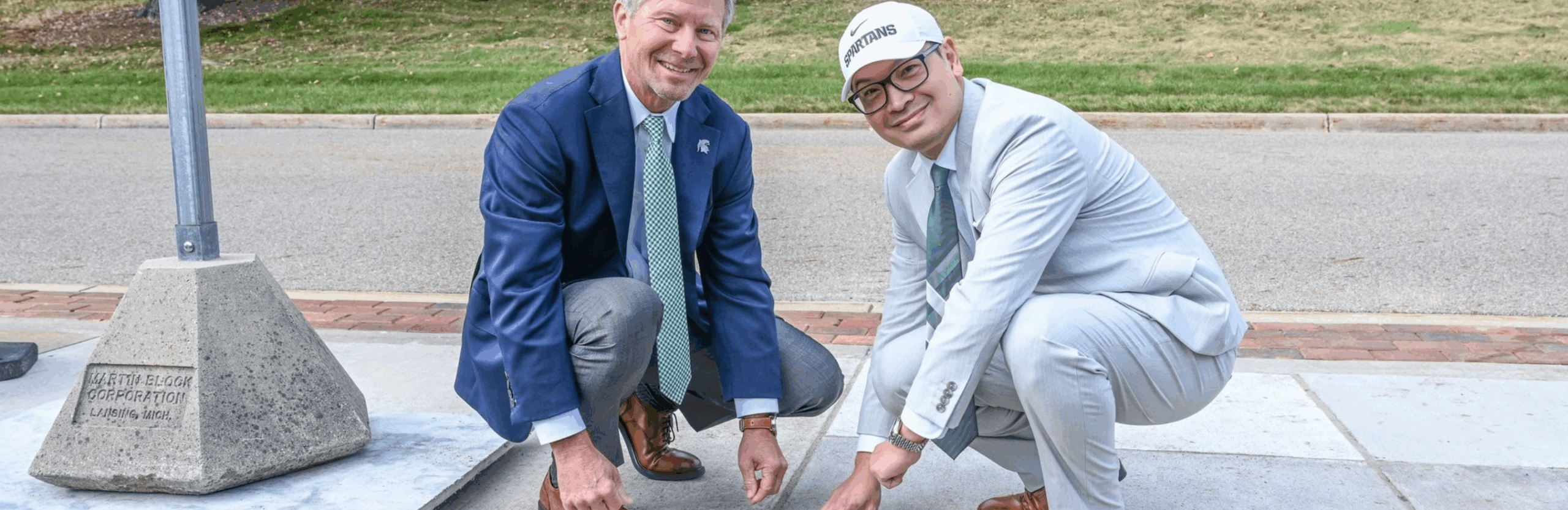
Photo Credit: msutoday.msu.edu
Michigan may be a step closer to roads that can fight winter weather on their own. Researchers at Michigan State University recently installed four experimental slabs of concrete designed to store heat, self-heal cracks, and even withstand significant weight without damage.
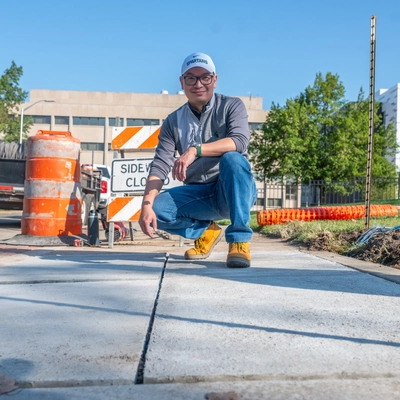
The slabs, each made from a slightly different version of a proprietary formula, are part of a pilot project set to test how the material performs under real-world conditions this winter. Initial lab testing shows the concrete can self-repair cracks thinner than a human hair and hold roughly half the weight of an average car without cracking.
One of the key innovations is the concrete’s self-heating property: it stores heat from sunlight and releases it as temperatures approach freezing, helping melt ice and snow. Combined with its bendable, self-healing characteristics, this could significantly reduce the costs and safety risks associated with Michigan’s notoriously harsh winters.
Researchers plan to monitor the slabs with embedded wiring that tracks performance under foot traffic and measures the effectiveness of the self-heating function. Beyond campus applications, experts believe the technology could benefit urban and rural communities alike by lowering infrastructure costs and improving road safety.
MSU officials, city representatives, and local government leaders attended the unveiling, underscoring the potential for this research to influence regional economic development and infrastructure planning.
If successful, this next-generation concrete could transform how states like Michigan approach road maintenance, offering a glimpse into a future where winter roads are safer, longer-lasting, and more resilient against the elements.
Credit: Derrick L. Turner & msutoday.msu.edu